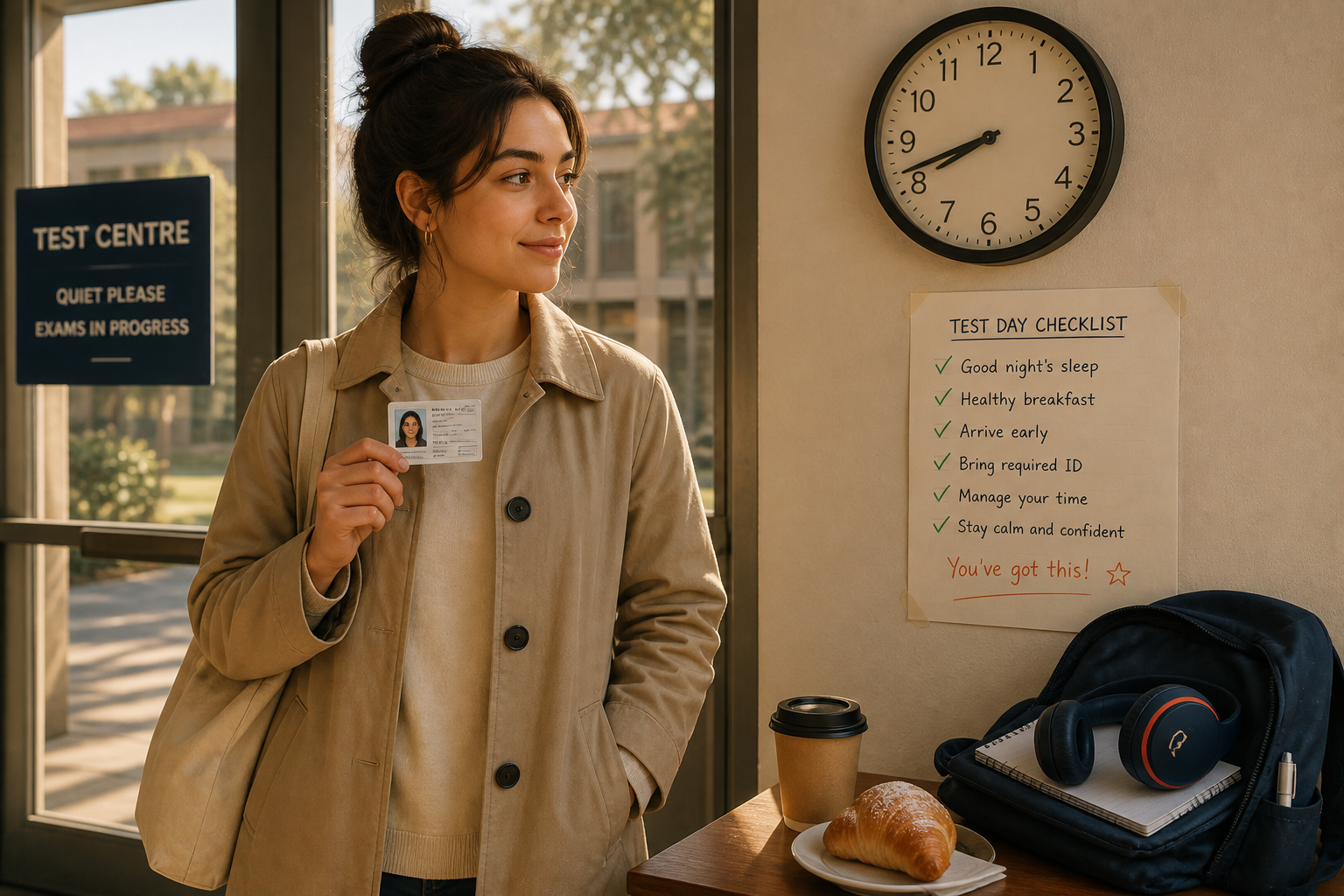
Knowing English is only half the battle. CELPIP is computer-delivered, tightly timed, and task-specific — small habits on test day can add or subtract a full CLB level.
These tips apply whether you are aiming for CLB 7 or pushing toward CLB 9+. Use them during practice first so they feel automatic when it counts.
Before You Start
Arrive early, bring acceptable ID, and use the restroom before check-in. Once the session begins, you cannot pause the clock.
During the tutorial screens, read instructions even if you have practiced before. Task wording changes slightly between parts, and misreading a prompt is an expensive error.
Listening Tips
You hear each clip once. Jot abbreviations and symbols — not full sentences — so you can keep up with the audio.
When a question asks about a speaker’s attitude or purpose, listen for tone and emphasis, not only factual details.
If you miss an answer, make your best guess and move on. Lingering on one item can cascade into missed questions later.
Reading Tips
Skim for structure first: headings, dates, names, and transition words tell you where information lives.
For blank-fill items, read the whole sentence before looking at options. Grammar clues often eliminate two choices immediately.
Keep a steady pace. Spending ten extra minutes on one passage may mean rushing the final section unprepared.
Writing Tips
Spend two to three minutes outlining. A short plan prevents rambling and helps you cover every bullet in the prompt.
Match tone to audience. A complaint to a manager sounds different from an email inviting a friend to an event.
Leave three minutes to proofread verb tenses, subject-verb agreement, and spelling of common words you often mistype.
Speaking Tips
Use all of your preparation time. A quick outline of two or three points keeps you fluent for the full recording window.
Speak at a steady, conversational pace. Very fast speech increases mistakes; long silences suggest you ran out of ideas.
If you stumble, recover and continue. One corrected mistake rarely ruins a response, but stopping early often does.
Mindset and Energy
The exam is long. Between modules, take one slow breath and reset your posture. Fatigue in hour two causes careless errors you would never make when fresh.
Trust your preparation. You do not need a perfect response on every task — you need consistent, complete answers across the whole test.
When you finish, review nothing in the parking lot. Your next step is to rest, then analyze your official score report when it arrives and plan any retake strategically.